
Autism Stimming
Causes, Types, and How Parents Can Support Their Child
Children with autism often show behaviors that may look unusual to others but actually serve an important purpose. One such behavior is stimming, which is commonly seen in individuals with Autism Spectrum Disorder (ASD).
Understanding stimming helps parents, caregivers, and educators respond with empathy and provide the right support for the child.
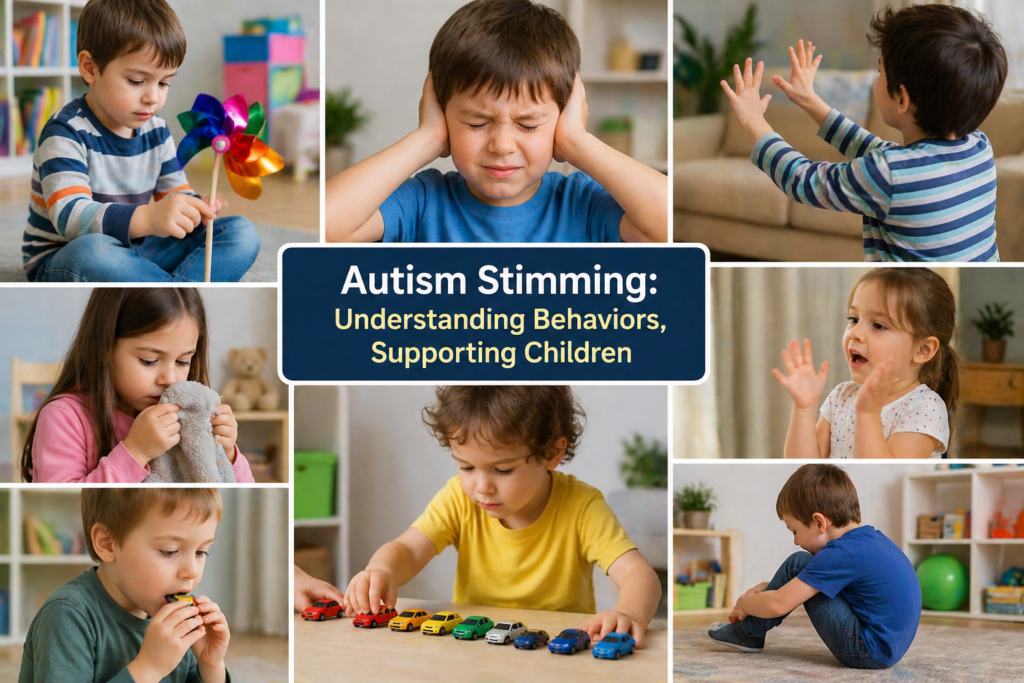
What Is Stimming?
Stimming, short for self-stimulatory behavior, refers to repetitive movements or sounds that help a person regulate emotions or sensory experiences. It may involve body movements, sounds, or interactions with objects.
Common examples include:
- Hand flapping
- Rocking back and forth
- Repeating words or sounds
- Spinning objects
- Tapping fingers or snapping
These behaviors help many autistic children calm themselves, focus, or cope with overwhelming environments.
Why Do Children With Autism Stim?
Stimming can happen for different reasons depending on the child and the situation.
Sensory Regulation
Children with autism often process sensory information differently. Stimming can help them regulate sensory input.
Managing Emotions
A child may stim when they feel:
- Excited
- Nervous
- Overwhelmed
- Frustrated
Coping With Sensory Overload
Bright lights, loud noises, or strong smells can overwhelm children with autism. Stimming may help them block out these stimuli and regain control.
Types of Stimming
Stimming behaviors may involve different senses.
Auditory Stimming
Includes humming, repeating words, or tapping objects.
Visual Stimming
Includes staring at lights, spinning objects, or hand flapping.
Tactile Stimming
Includes rubbing objects, scratching surfaces, or repetitive hand movements.
Vestibular Stimming
Includes rocking, spinning, or jumping repeatedly.
These behaviors vary from child to child and may change depending on their environment.
Is Stimming Harmful?
In most cases, stimming is not harmful. It helps children regulate their emotions and sensory experiences.
However, intervention may be needed if stimming:
- Causes self-injury
- Disrupts learning or daily activities
- Interferes with social interaction
The goal is not always to stop stimming, but to help children manage it safely.
How Parents Can Support a Child Who Stims
Parents can support their child through simple strategies.
Observe Triggers
Notice when and why the child stims. It may be related to stress, excitement, or sensory overload.
Provide Sensory Tools
Fidget toys, squeeze balls, or textured toys can help children regulate sensory needs.
Create a Calm Environment
Quiet spaces and predictable routines help reduce stress.
Consider Occupational Therapy
Therapists can teach children alternative ways to regulate their sensory experiences.